Skip to content
Pharma Observatory a Scientist.com platform

Competitive intelligence and portfolio strategy

See who is ahead in a target or indication, and what was dropped

Active programs by phase, discontinued programs, regulatory dates and the sponsors behind a disease or target, with each drug counted once under all its names.

Individual plan, $249/seat/mo. Card required.

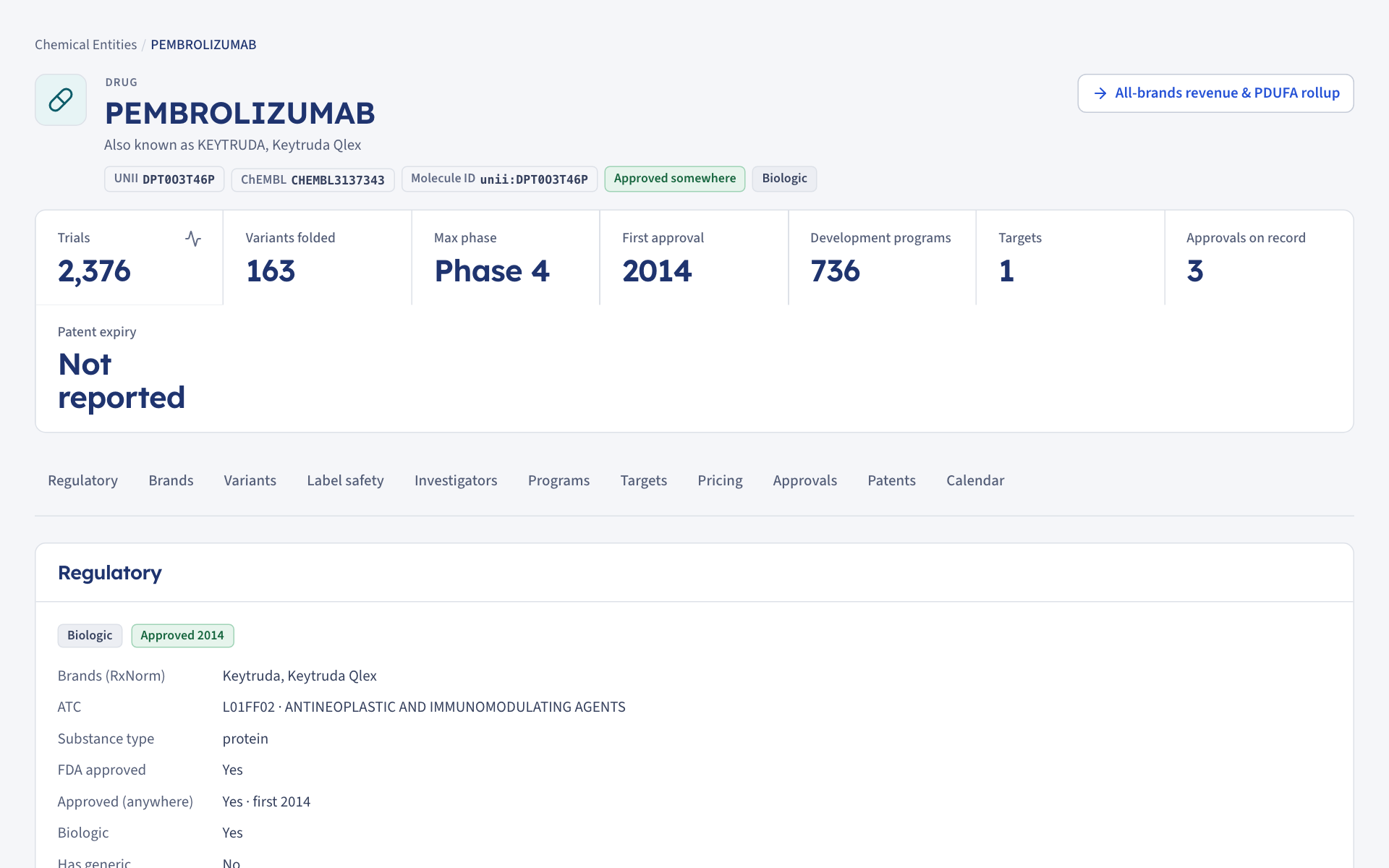
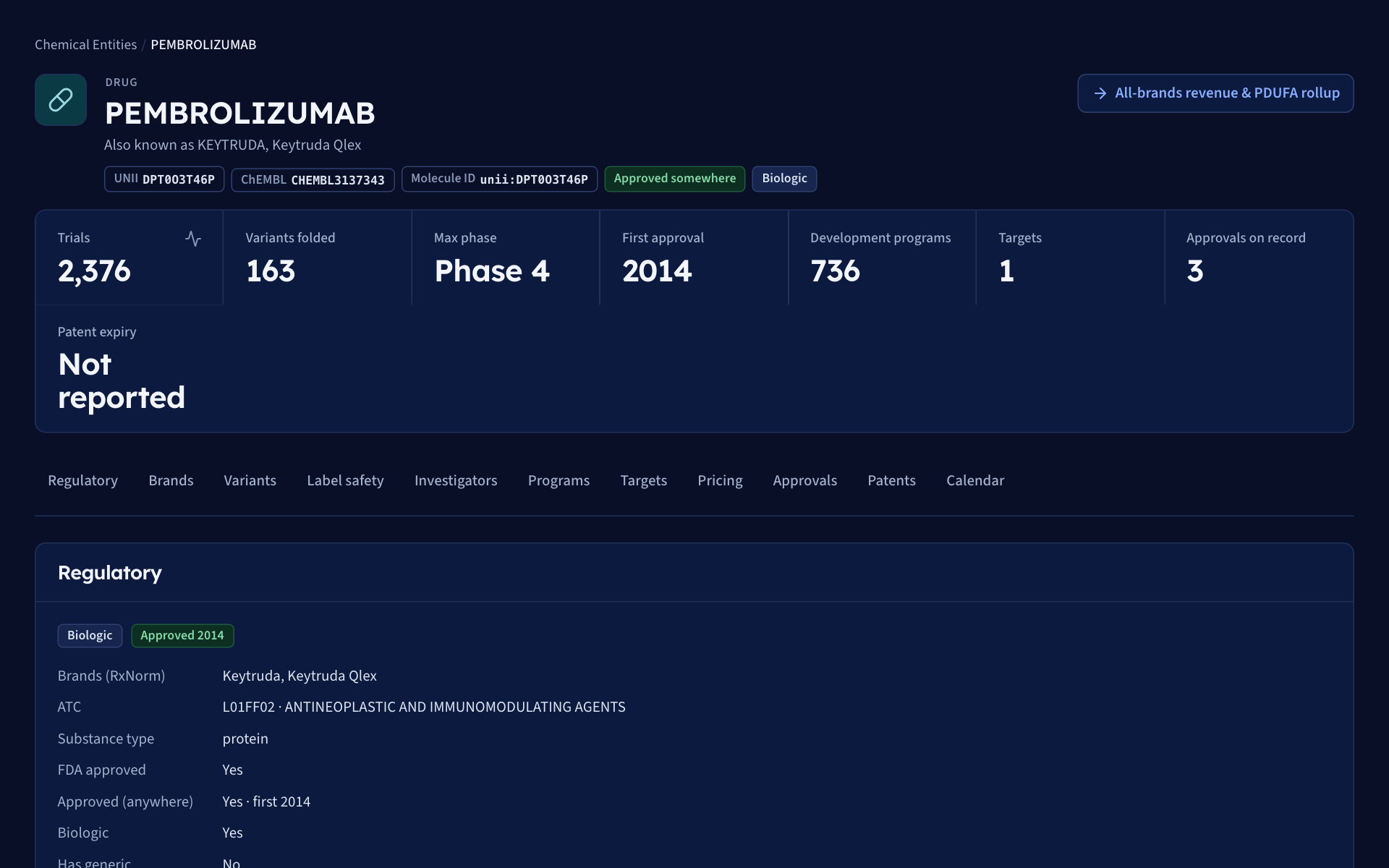
A drug page: the molecule's name and identifiers, trial, program and approval counts, and a regulatory details table
A drug page for one molecule: counts of trials, variants, programs and approvals above its regulatory details. Captured from production data on 2026-10-08.

The problem today

A landscape slide starts as a registry export and days of deduplication. A compound filed under a code name, a generic name and a brand name shows up as three competitors, and a discontinued program drops out of view. White space that looks real can be an artifact of naming.

Why this beats what you do now

  • The deduplication is done. Each drug is one entry under every name, so the program count is the count.
  • Discontinued programs stay visible. Stalled and dropped programs are listed with the active ones.
  • Every row opens. A count on a target or condition page leads to the trials behind it.
  • Start on a card. The Individual plan is published at $249/seat/mo and starts with a 14-day trial.

What you can answer

Pages marked free open without an account. The rest open in the product, starting with a 14-day trial.

Who is active in a disease, and with which drugs?

A condition page lists the lead sponsors and the drugs trialled in a disease beside its trial counts by phase and by start year, so the field in an indication can be read from one page. Diabetes Mellitus is a worked example. 22,120 registered trials study Diabetes Mellitus or one of its sub-conditions.

Free to read Conditions Open the Diabetes Mellitus page

Is the biomarker behind a program validated, or only associated?

A biomarker page separates FDA companion diagnostic assertions, curated cancer actionability, trial mentions and target-disease associations, so the biomarker rationale behind a program can be graded before it goes on a landscape. BRAF is a worked example of one gene's evidence split by type. The BRAF page lists 19 FDA companion diagnostic assertions today.

Free to read Biomarkers Open the BRAF page

How many programs address a target, and how do they split by phase?

A target page counts the programs aimed at it and charts them by phase, so the split between early and late work is visible, and it lists the companies developing against the target and the programs that were discontinued. The page labels its crowding counts as a floor on the field and not the whole of it.

In the product: Targets

Which programs stalled or were discontinued?

The Program explorer lists development programs as drug and indication pairs, with a minimum-phase filter from any phase to Phase 4. Target pages also keep a Discontinued programs list, so dropped work stays in view.

In the product: Programs

Which drugs are the same molecule under different names?

A drug page folds one molecule's brands, trial variants and development programs into a single record, so a code name, a generic name and a brand name are counted once. That keeps the number of competitors on a landscape slide honest.

In the product: Chemical Entities

Which regulatory decisions are coming up?

The Calendar shows when a competitor's FDA decision is due, with the drug and sponsor attached where the match holds up. The public lane is built from SEC 8-K and 6-K filings, and the Individual plan adds the licensed Benzinga catalyst calendar, shown with its attribution.

In the product: Calendar

Scope

Programs are built from public registries and filings. A program a company has never disclosed publicly will not appear, and crowding counts on a target page are a floor on the field.

Rebuild one landscape slide during the trial

Every answer above marked "In the product" opens with the Individual plan.

See all plans

Individual plan, $249/seat/mo, card required.

See the other teams